
Wampee Plantation – Pinopolis – Berkeley County
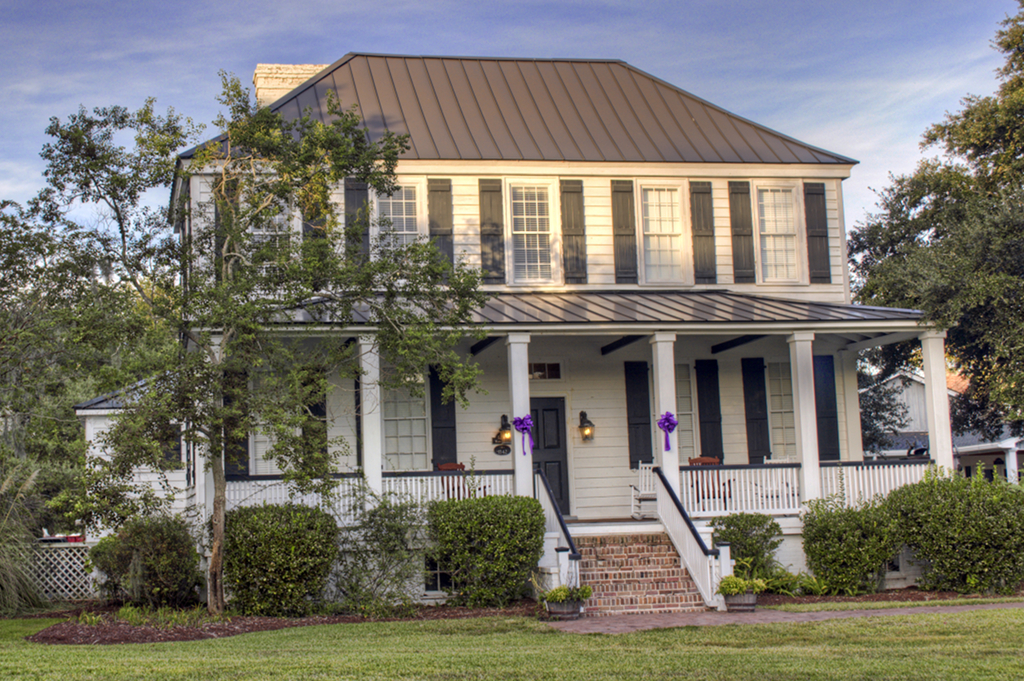
Basic Information
- Location – 1190 Chicora Drive, Pinopolis, St. John's Berkeley Parish, Berkeley County
After the Santee Cooper Hydroelectric and Navigation Project flooded the area, the plantation now sits on the banks of Lake Moultrie.
- Origin of name – John A. Zeilgler contributed the following information to Names in South Carolina in 1963: "Wampee, as first seen by the early settlers, was more than a plantation; it was a name applied generally to a considerable region lying west of Biggin Creek, one of the headwaters of the Cooper estuary. It was so named by the Indians because of the abundance thereupon of 'wampee' relished by birds indigenous to their tribal hunting grounds."
In particular, wampee designated pickerelwood (Pontederia), a plant whose name was thought to mean "wild rice" or chickweed eaten by birds prevalent in the area where the natives chose to hunt (6). Today, wampee is the name for Clausena lansium, an unrelated species from Asia.
- Other names – Wampee was subdivided over the years, growing and shrinking with various owners. Part of the original Wampee lands eventually became both Somerton and Somerset plantations.
- Current status – Owned by Santee-Cooper and used as part of their conference center
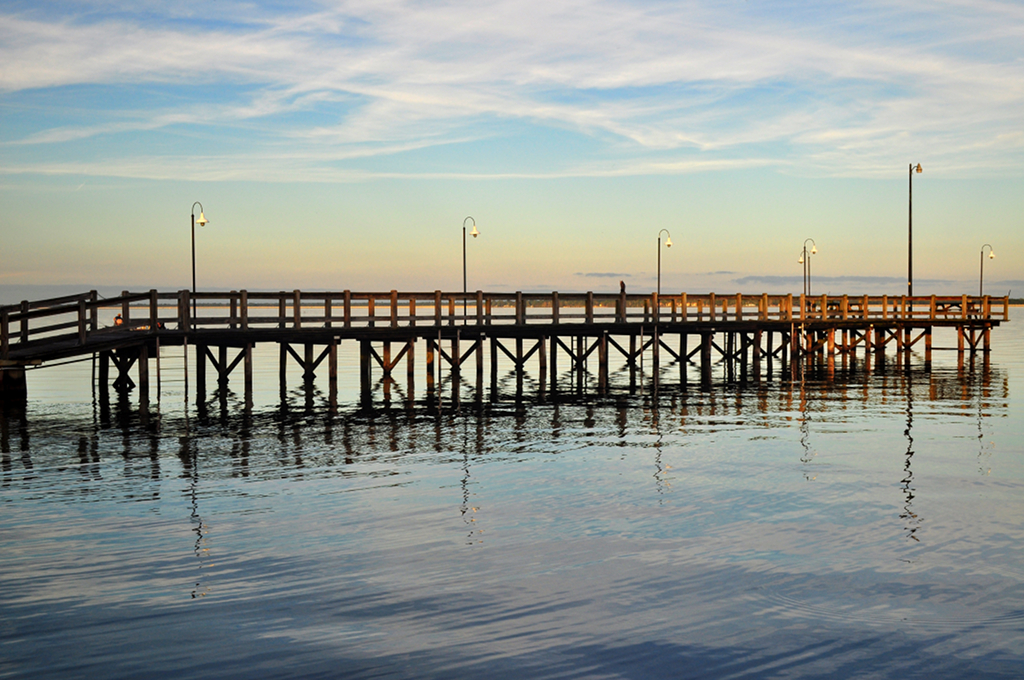
— Wampee Plantation Dock on Lake Moultrie © Gregg Turbeville, 2013 —
(Do Not Use Without Written Consent)
NOTE: The ownership line of what is today called Wampee Plantation is a bit confusing. We do know that in 1696 John Stuart received a grant for 1,000 acres which was referred to as Wampee and that in 1701 Elizabeth Wetherick received a separate land grant in the same area and called her property Wampee as well. If you have any information that can help distinguish the two Wampee Plantations, please submit it here.
Timeline
- 1696 – Earliest known date of existence
John Stuart received a grant for 1,000 acres in return for his work reviewing the Fundamental Constitution by request of Sir James Colleton. Stuart had difficulty getting his promised land but eventually prevailed, receiving it in small increments. Stuart added additional lands to his holdings, ending up with several thousand acres (4, 8).
Learn more about John Stuart's land grant.
Note: John Stuart's father Charles spelled the family name as Stewart. It appears the Stuart spelling was adopted by the family sometime during John or his son John II's generation (8).
- 1698 – Stuart conveyed 804 acres to Reverend William Screven. Screven would name his property Somerton Plantation (2) (6).
- 1698-1715 – Stuart sold additional pieces of his Wampee holdings during these years (8).
- 1701 – On May 17, Reverend Screven's sister-in-law, Mrs. Elizabeth Wetherick, received a grant for 325 acres from the Lords Proprietors. Her plantation lay below Somerton; she named it Wampee (6).
- 1715 – Stuart died, deeding the remainder of Wampee to his wife and two of his sons, John Stuart II and Charles Stuart (8).
- 1728 – On March 26, Paul Ravenel purchased Wampee Plantation. As noted in Names of South Carolina, Volume X, Ravenel "built his house on the now site of Wampee and the foundations of the present house are probably the same."(6)
- 1744 – James Stuart, the grandson of the elder John Stuart, died and left his portion of Wampee to his wife. It is unclear when and how James Stuart acquired his share (8).
- 1749 – Gabriel Guignard owned 870 acres of the subdivided Wampee Plantation and had a house on his portion. Guignard probably purchased the land from Reverend Screven and may have added additional acres via a royal grant.
- ? – Thomas Sabb purchased Wampee land.
- ? – Sabb sold 300 acres to James Courtonne, Jr.
- 1775 – A map from this year indicates that Wampee encompassed 300 acres and belonged to Charles Johnson (6).
- 1790 – Charles Johnston purchased the property and left it to his daughter and son-in-law, James Macbeth, upon his death.
- 1822 – Present house built (third dwelling to be erected there) for James Macbeth's widow by their son Charles Macbeth.
- ? – Richard Yeadon Macbeth inherited Wampee.
- ? – Richard Yeadon Macbeth's widow willed Wampee to their nephew William Cain.
- ? – William Cain's widow received property upon her husband's death.
- 1939 – Mrs. Elizabeth Cain owned Wampee at the time work began on the Santee Cooper Hydroelectric and Navigation Project (6). This project displaced many families and communities, and many historic homes were lost as the area was flooded.
- 1944 – During autumn, Santee Cooper restored the home under the supervision of E. T. Heyward (6).
- 2013 – The plantation house and roughly 33 acres were not flooded. Today the home as used as a conference center for Santee Cooper.
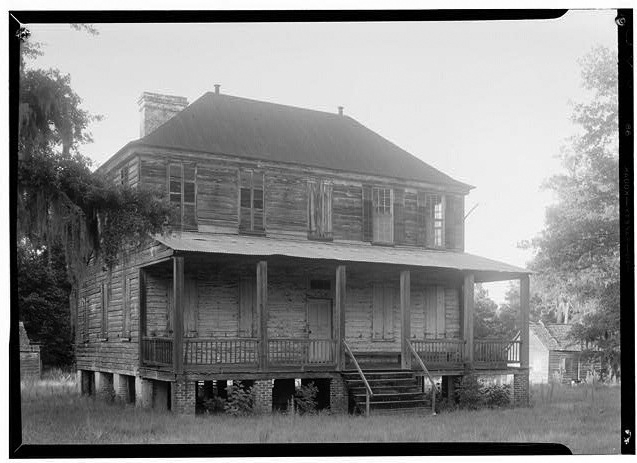
— Wampee Plantation 1939 © Library of Congress —
(Prints & Photographs Division HABS SC,8-PINOP.V,6)
Land
- Number of acres – 1000+ acres in 1696; 870 acres in 1749; 300 acres in 1783; 33 acres in 2010
- Primary crop – Rice and indigo
- Indian mounds can still be seen on the property.
Slaves
- Number of slaves – After the Civil War, 14 former slaves remained on Wampee Plantation, as recorded in the Freedman's Bureau Register of Destitutes in 1867. They were:
– Isaac Snipe, 70
– Robert Bob, 60, [a]lone, chronic abcess
– Frank Point, 81, 1 son, 1 daughter, sore back
– Savana Macbeth, 97, [a]lone, blind
– Dina Macbeth, 82, [a]lone
– Celien Carson, 70, cripple[d] in one foot
– Judy Ravenel, 79, [a]lone, cripple[d] in one foot
– Primus Ransom alias McKelvey, 70, 1 crazy daughter, paralysis, cripple[d], unstable to walk
– Liddy Ransom alias McKelvey, 26, idiotic, cripple[d] in hip
– Mary Thomas, ?, old and deaf
– Billy Mitchell, ?
– Rosella Snipe, ?
– Nancy McKelvy, 67
References & Resources
- Wampee Plantation: Porcher Family: Click here
- The South Carolina Historical Magazine, Volume 9, Issue 2
- Waterman Report of 1939
- The South Carolina Historical Magazine, Volumes 13-14
- J. Russell Cross, Historic Ramblin's through Berkeley
(Columbia, SC: R.L. Bryan Company, 1985)
 Order Historic Ramblin's through Berkeley
 - Claude Henry Neuffer, editor, Names in South Carolina, Volume I through 30 (Columbia, SC: The State Printing Company)
Order Names in South Carolina, Volumes I-XII, 1954-1965
Order Names in South Carolina, Index XIII-XVIII
- Norman S. Walsh, Plantations, Pineland Villages, Pinopolis and Its People
(Virginia Beach, VA: Donning Company Publishers, 2007)
Order Plantations, Pineland Villages, Pinopolis and Its People - Dee Green, descendant of Charles Stewart