
Buckfield Plantation – Yemassee – Hampton County
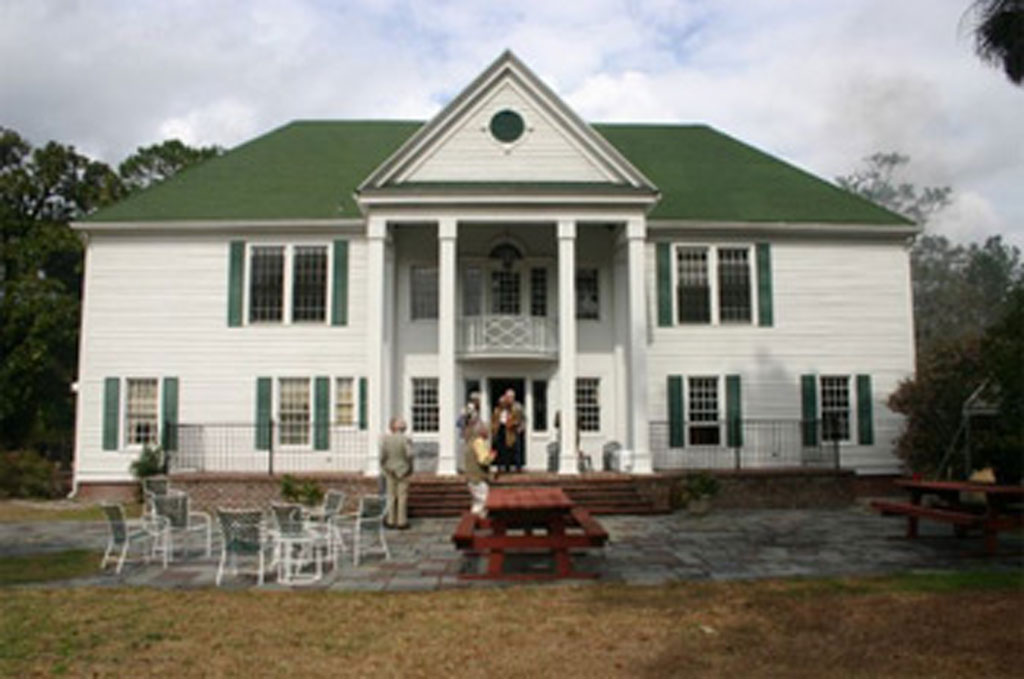
— Buckfield Plantation © J. Michele Collier, 2005 —
(Do Not Use Without Written Consent)
Basic Information
- Location – Yemassee, Hampton County
During the 1900s Buckfield's property fell in Beaufort, Hampton and Jasper counties.
- Origin of name – ?
- Other names – Spotsylvania
- Current status – Privately owned and used for timber production and deer hunting

— Buckfield Plantation Avenue of Oaks © J. Michele Collier, 2005 —
(Do Not Use Without Written Consent)
Timeline
-
We define a plantation as a large farm on which most of the work was done by slaves. Thus all the plantations we catalog were established before the Civil War.
- ? – Earliest known date of existence
- ? – House built
- 1907 – Claude W. Kress purchased Gregorie Plantation, Recess Plantation, and Savannah Plantation for a total of 4,378 acres (1, p. 181).
- 1911 – Kress increased his holdings by purchasing the Pine Land tract, Lapham Lands and Stokes Plantation (1, p. 181).
- 1912 – Retreat Plantation became under Kress' ownership. With this purchase, the total acreage of Buckfield was more than 11,000 acres (1, p. 181).
Buckfield was the winter home for Claude W. Kress and his family. Kress also developed the plantation as a hunting preserve for quail and grew paperwhite narcissus bulbs in the rice fields. The bulbs were sold across the county through his chain of Kress Five and Ten Cents stores (1, p. 179).
- 1952 – The large majority of Buckfield was sold to the Camp family and associates. Daniel E. Huger Jr. and his sister, grandchildren of Claude W. Kress, would retain ownership of their mother's house on Buckfield (1, p. 182).
- 1964 – John D. Hollingsworth purchased the plantation. Over the coming years, he purchased may nearby acres to increase the plantation to 20,000 acres. Hollingsworth sold the land's timber and hunting rights (1, p. 182).
- 2000 – Hollingsworth died leaving Buckfield to Furman University (1, p. 183).
- ? – Richard L. Chilton Jr. purchased Buckfield from Furman University. Chilton also ownes White Hall Plantation (1, p. 183).
At this time, we have not been able to confirm when Buckfield was established. As it is a combination of several plantations in the area and being a well-known property, we have decided to include it.
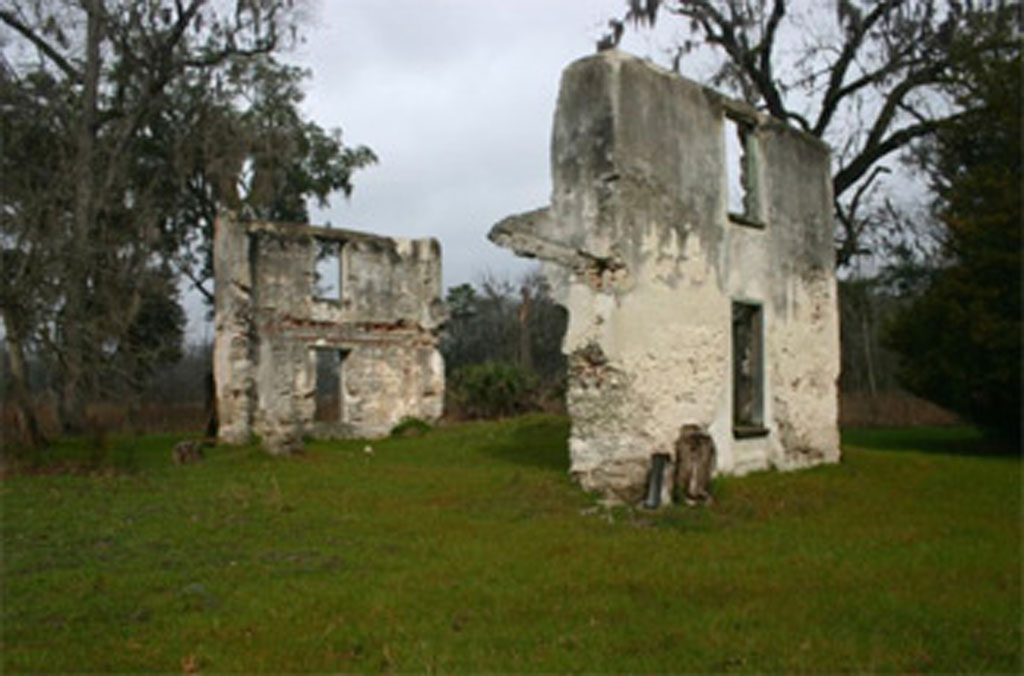
— Buckfield Plantation Ruins © J. Michele Collier, 2005 —
(Do Not Use Without Written Consent)
Land
- Number of acres – 4,378 in 1907; 11,000 in 1927; 20,000 acres in late-1900s (1)
- Primary crop – Rice in early years, paperwhite narcissus bulbs in the early 1900s, and timber during World War II. The timber was sold to the government which used German prisoners-of-war to harvest the trees (1, p. 181).
Owners
- Alphabetical list – Camp family and associates (1952-1964), Richard L. Chilton Jr., Furman University (2000-?), Reverend Gourlay, Heyward, John D. Hollingsworth (1964-2000), Daniel E. Huger Jr. and sister (1952-?), Claude W. Kress (1907-1952)
Slaves
- Number of slaves – ?
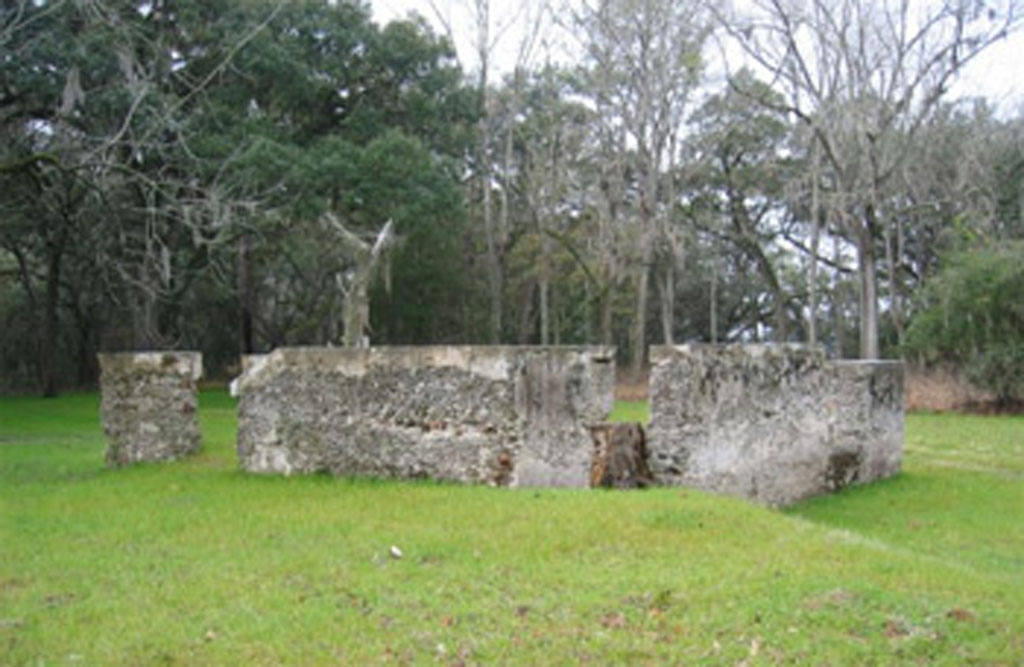
— Buckfield Plantation Foundation Ruins © J. Michele Collier, 2005 —
(Do Not Use Without Written Consent)
Buildings
- The main house is a two-story white frame of early American architecture. Kress would build two more houses on Buckfield for his daughters and their families (1).
References & Resources
- Robert B. Cuthbert and Stephen G. Hoffius, editors, Northern Money, Southern Land: The Lowcountry Plantation Sketches of Chlotilde R. Martin
(Columbia, SC: The University of South Carolina Press, 2009)
- 30-15 Plantation File, held by the South Carolina Historical Society
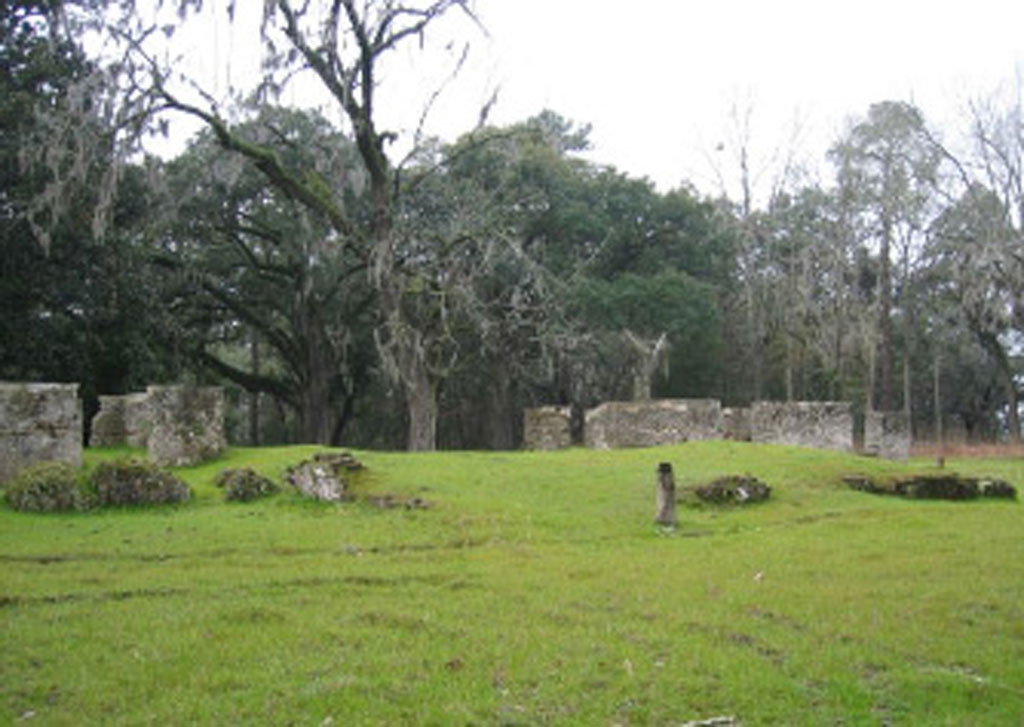
— Buckfield Plantation Ruins © J. Michele Collier, 2005 —
(Do Not Use Without Written Consent)

— Buckfield Plantation Hunting Dogs © J. Michele Collier, 2005 —
(Do Not Use Without Written Consent)
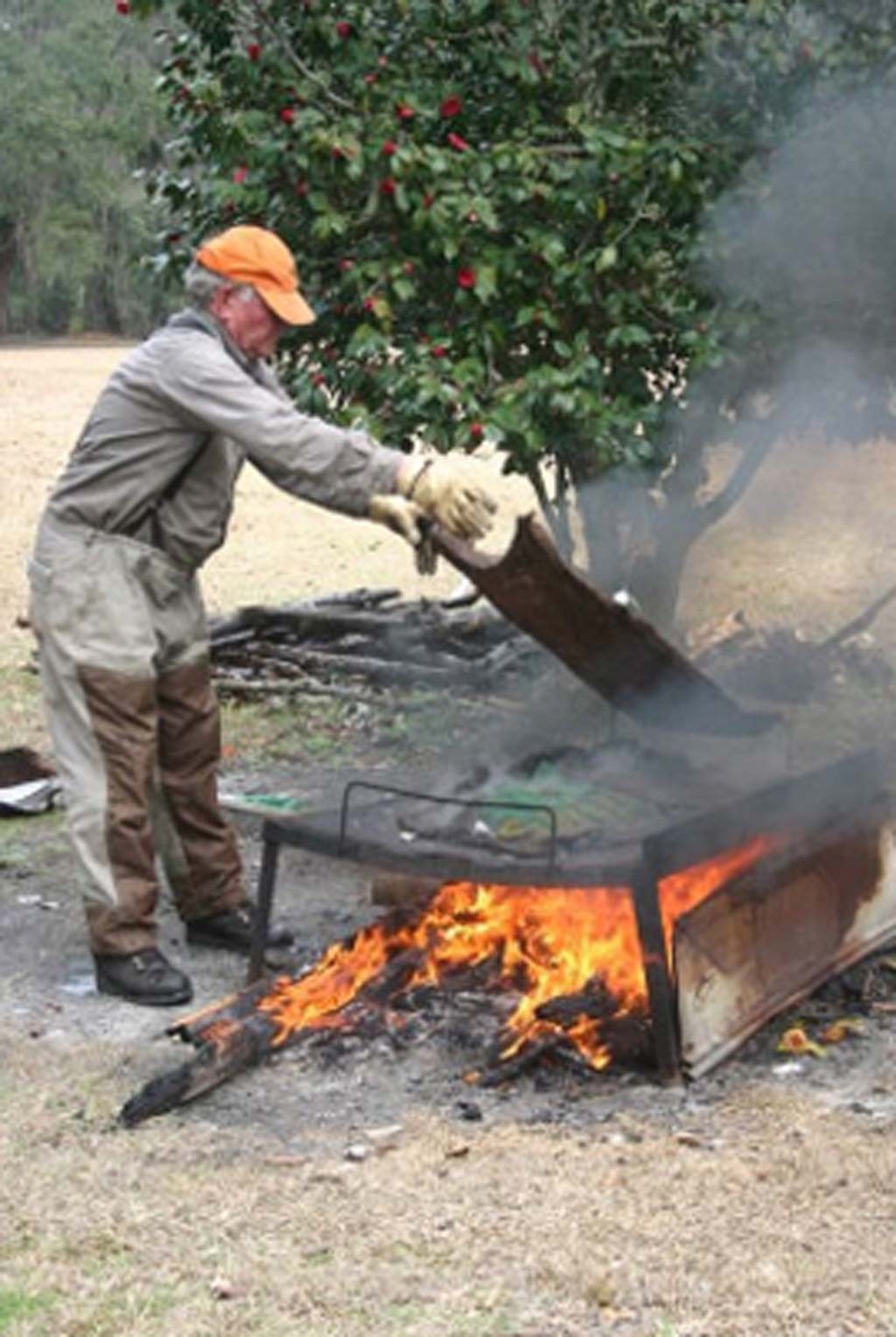
— Buckfield Plantation Hunter © J. Michele Collier, 2005 —
(Do Not Use Without Written Consent)