
Middleburg Plantation – Huger – Berkeley County
Basic Information
- Location – Eastern branch of the Cooper River, Huger, St. Thomas and St. Denis Parish, Berkeley County
Located off Cainhoy Road on Middleburg Lane
- Origin of name – Named after the city of Middleburg, Zeeland, Netherlands where the builder, Benjamin Simons, spent a portion of his youth.
- Other names – Pimlica Maptica, Indian name for the area (1)
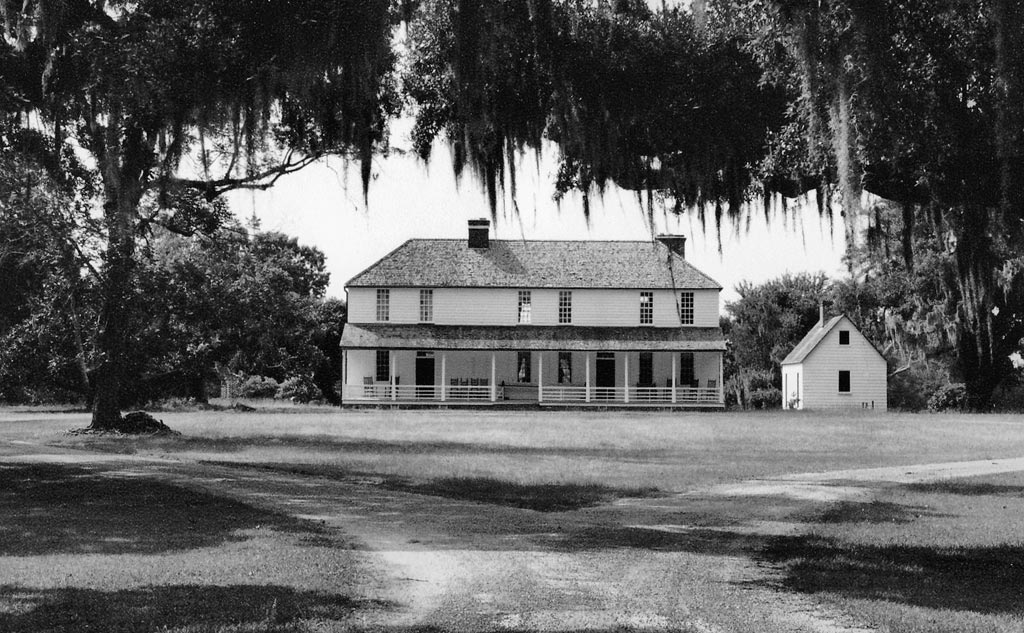
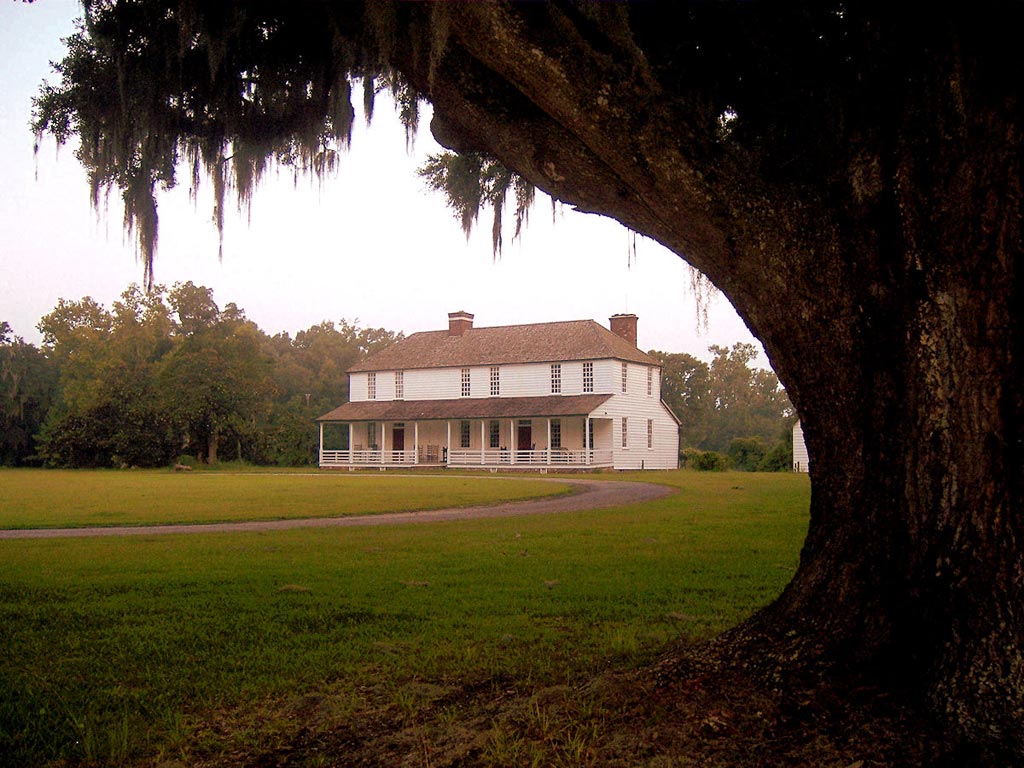
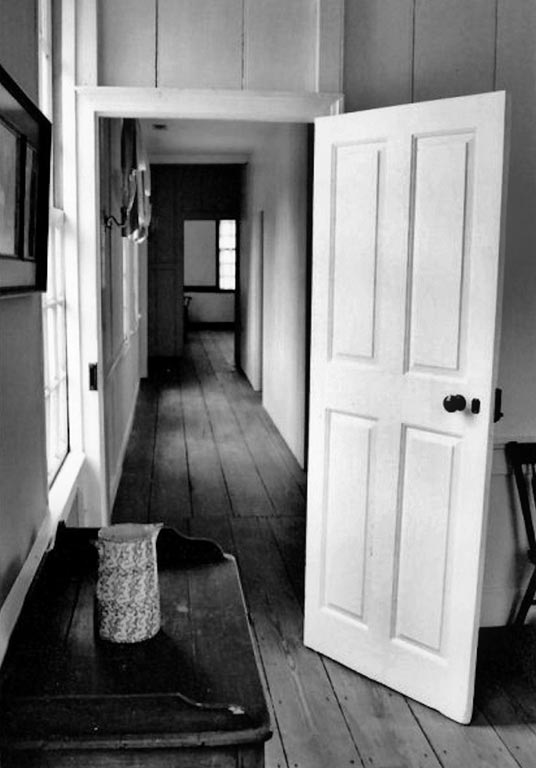
- Current status – The oldest wooden plantation house in the South Carolina, Middleburg Plantation is privately owned.
Timeline
- 1693 – Earliest known date of existence (1)
A 100-acre tract of land was marked for Benjamin Simons (1).
- 1697 – House built by Benjamin Simons (1)
The original house had two stories with two rooms on each floor. Sometime before 1717 an addition, with one room on each floor, was added to the house (1).
- 1704 – Simons received a grant for 350 acres (3).
Simons continued to increase the acreage of Middleburg and amassed 1,545 acres by 1717 (3).
- 1717 – Benjamin Simons died leaving the plantation to his 4-year-old son Benjamin II (1).
- 1772 – Benjamin Simons III inherited the plantation upon his father's death and increased the tract to 3,342 acres (1).
Revolutionary War battles surrounded Middleburg, and British Colonel Banastre Tarleton targeted the house to be burned. It is unknown why the house was spared, but scars remain. Colonel Tarleton's saber left a lasting mark in a column by the front door and a British general etched his name on a window (1) (14).
- 1785 – Benjamin Simons III sold some of the property to John Bryan. This piece became Camp Vere Plantation (3).
- 1787 Benjamin Simons III had 10 children but only three daughters lived until his time of death. He divided the plantation among the girls (3):
– Sarah Lydia Simons Lucas inherited 774 acres which included the house.
– Catherine Simons Hort inherited 768 acres which became known as Simonsville and Horts. This land would later be purchased by William J. Ball who changed the name to Halidon Hill Plantation.
– Mary Simons Maybank inherited 1,056 acres which became known as Smoky Hill.
- 1799 – Sarah Lydia Simons married Jonathan Lucas, Jr. Jonathan built the first public toll rice mill at Middleburg (1).
- ? – Sarah and Jonathan's children jointly inherited the plantation (1).
- 1840 – Jonathan Lucas III purchased Middleburg at auction from his brothers and sisters (1).
- ? – At his death, the plantation passed to his children (1).
- 1858 – Thomas Bennett Lucas died leaving the management of the plantation solely to his brother Simons (1).
- ? – Dr. Benjamin Huger leased the plantation (1).
- ? – The Simons descendants used Middleburg as collateral for a loan from John Coming Ball (1).
- 1872 – Ball foreclosed on the loan for lack of payment and took possession of Middleburg. He had previously acquired Halidon Hill Plantation and Smoky Hill and merged all three back into one. He married a Simons descendant and once again turned Middleburg into a profitable rice plantation (3).
- 1927 – Ball passed away and with him died the cultivation of rice at Middleburg. Marie Guerin Ball Dingle inherited the property upon her father's death (1).
- 1963 – Marie Dingle died leaving the plantation jointly to her four nephews – John, Charles, Coming, and James Gibbs (1).
- 1976 – John Gibbs was owner of record (2, p. 1).
- 1981 – Jane and Max Hill purchased the property from Gibbs and worked to restore as much of the property and buildings as possible.
- 2007 – The property and house were for sale and then was put up for auction. The auction did not receive a bid for the minimum reserve price so the plantation was not sold (13).
- 2015 – The Hills (Hill Family Limited Partnership) sold the plantation to Howard Martin Sprock III (Middleburg Plantation LLC of Charlotte) for $3.5 million. Sprock is the founder of Moe's Southwest Grill and Planet Smoothie restaurants (15).

Land
- Number of acres – 100 in 1693; 450 in 1704; 1,545 in 1717; 1,659 in 1772; 2,599 in 1785; 744 in 1787; 2,599 in 1872; 326 in 2007
- Primary crop – Timber, pine tar, turpentine, and cattle by Benjamin Simons I; rice by Benjamin Simons II
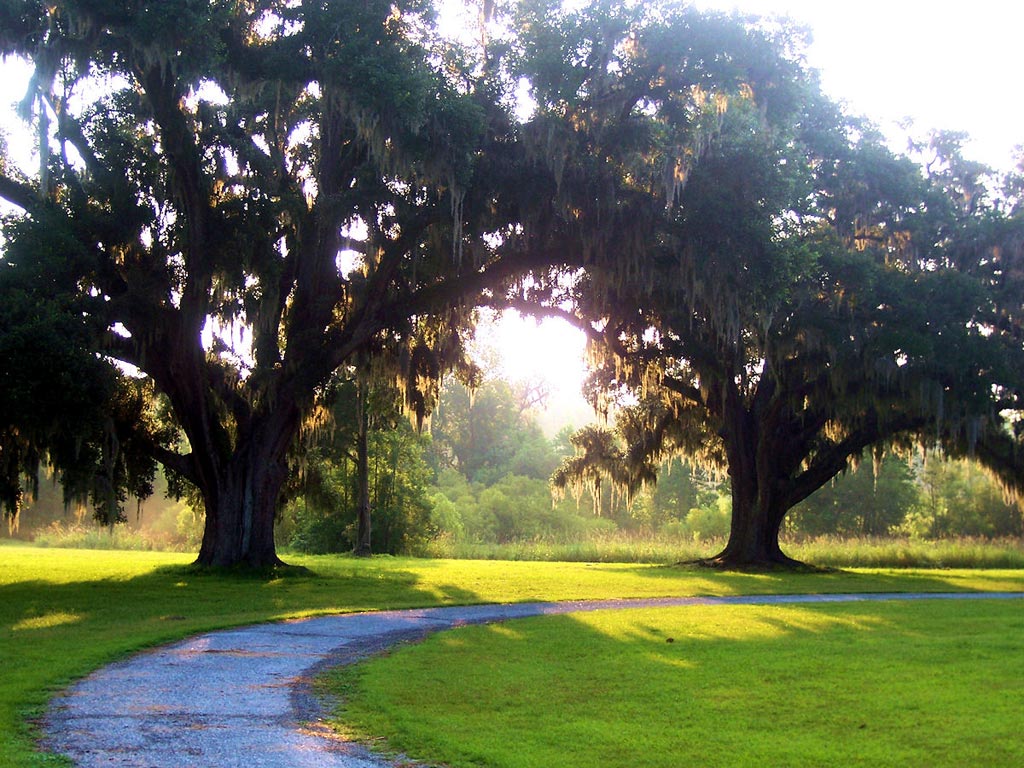
- The garden is known as the oldest original garden in America; it was laid out in the early 1800s. In 1997, owners Max and Jane Hill were working to retain as many of the original plants as possible (4).
- The land is slowly being returned to its pre-1926 appearance. All 326 acres of the plantation have been granted to the Lowcountry Open Land Trust.
Slaves
- Number of slaves – 87 in 1772; 89 in 1789 (5).
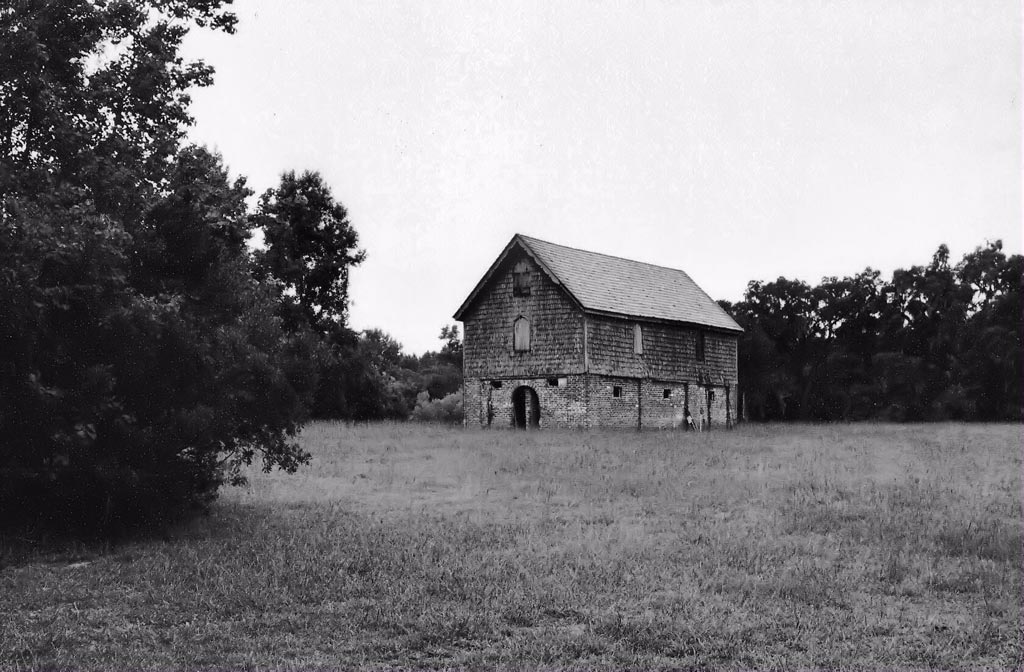
— Middleburg Plantation Corn House & Commissary © Brandon Coffey —
(Do Not Use Without Written Consent)
Buildings
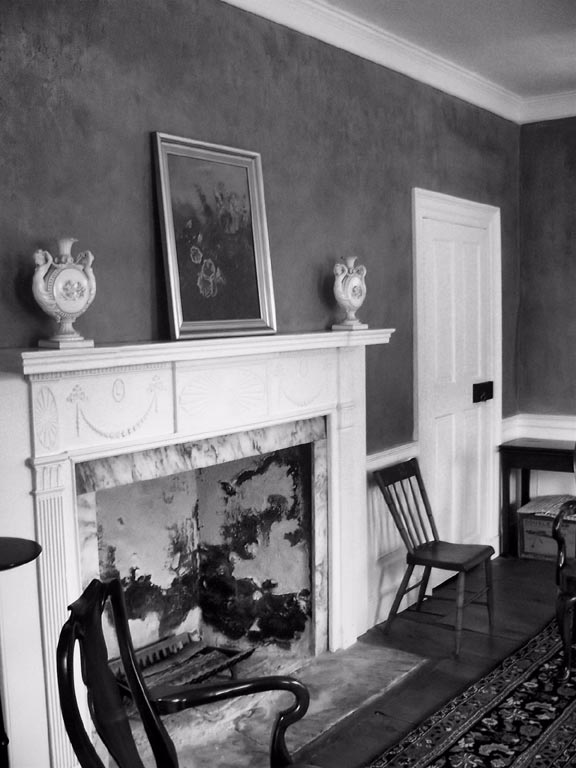
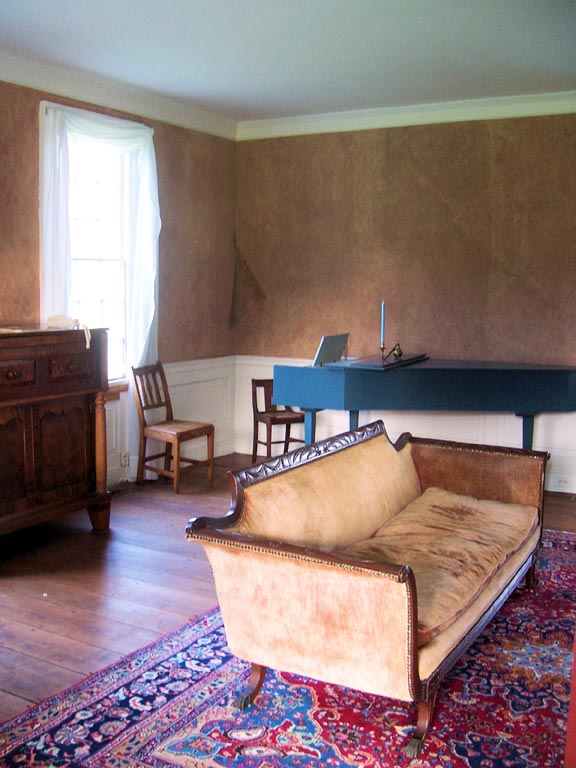
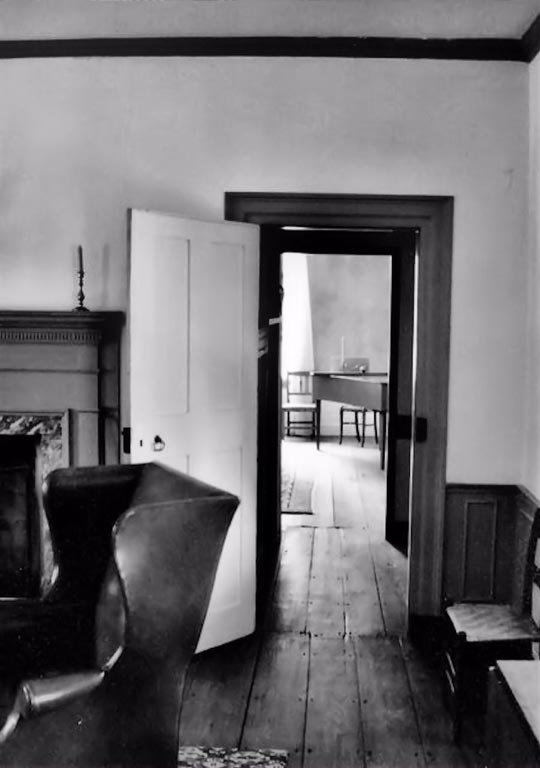
- A complete structural restoration of the 2,500-square-foot house has been accomplished (1).
- The original Carolina heart pine flooring is still in the house (6).
- The carvings of a young girl remain on an upstairs bedroom window documenting that she lived there 1898-1902 (14).
- The kitchen was built around 1786. It had been restored but was subsequently destroyed. It is now being restored again (1).
- Short-term stabilization of the surviving outbuildings is underway with hopes of long-term plans for restoration of remaining outbuildings and pond (1).
- Other buildings found on the plantation are the commissary, which was originally knows as the "corn house", carriage house, slave cabins, and rice mill (13) (16).
- There are remnants of a stable, servant's quarters, toll office, and threshing yard (5).
- Brandon Coffey shares the legend of a woman who fell down the stairs in the middle of the night and died. Her ghost is said to be wandering the house.

Family Recollections
- Macky Hill whose parents, Jane and Max Hill, purchased Middleburg Plantation in 1981, clears up a story that had long been told:
Had to comment – the slave jail story is a myth, said by the Gibbs family to have originated as sort of a joke by Edward Von S Dingle while giving tours, to make it more interesting. The building [corn house/commissary] is early 19th century, but the walls which form the two small spaces were dated by archaeologists from USC as being added much later, in the last quarter of the 19th century, after slavery was long past.
The building was known as the "corn house" as noted in a photo from the Johnson scrapbook of the 1920s, and earlier as the Commissary, or plantation store when Middleburg was a working rice plantation. The small barred ventilation windows were to keep people out, not in - it's thought that the ground story was designed to store seed rice while it was drying, and the design must have played a part in helping keep it from spoiling. Seed rice was harvested and prepared by hand, and perfect. It was the planter's competitive edge, the product of years or even generations of careful culture to maximize flavor and yield, and it was also delicious, so if not locked up, would be eaten. If destroyed, the planter was out of luck, since no other planter was likely to hand over any of theirs.
The commissary was used as a local store in the early 20th century, and at some point the plastered walls of the ground story became blackened with soot from its use as a smokehouse. The white hashmarks through the soot are Mr. Dingle's own marks from counting his sheep in the 1950s when he locked them up at night to keep them safe from the packs of dogs which preyed on them. It was a short-lived experiment to try and make some money, but proved to be not worth the effort.
The slave jail story is a compelling one, and while it does help give people a sobering reminder of what may have been part of the many ugly truths about slavery, it does a disservice to truth and history, being an imagined "truth" which obscures the historic importance of the building and its important and unique story. As the only surviving example of the type, it has its own important stories to tell. After all, why would a plantation need a store? It did, but the answers aren't as interesting as the myth of a slave jail. ~ Macky Hill, 2016
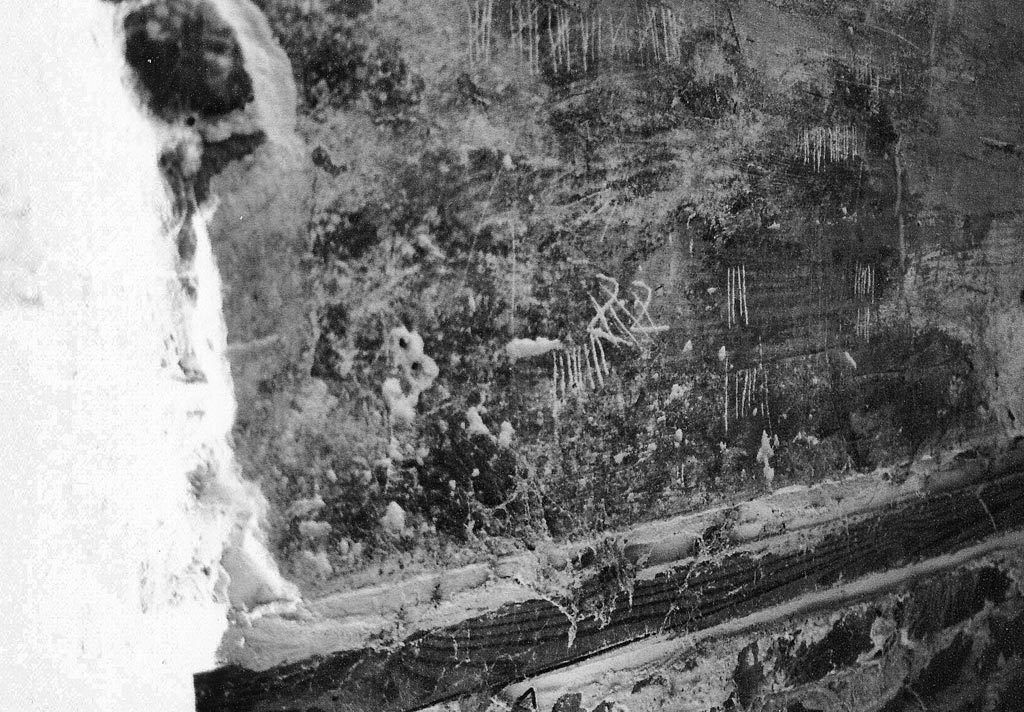
— Middleburg Plantation Marks on Commissary Wall © Brandon Coffey —
(Do Not Use Without Written Consent)
References & Resources
- Ray Timmons, Brief History of Middleburg Plantation: Click here
- National Register of Historic Places
– Nomination form - PDF - submitted in 1976
– Photographs, architectural overview
- Russell Cross, Middleburg Plantation and the Benjamin Simons Family: Click here
- Dave Munday, At the Crossroads Middleburg Owner Seeks to Save Garden (Post & Courier Newspaper: September 28, 1997)
- Real estate listing - source no longer available online
- Video of Bob Vila's tour
- Pictures of the interior of house - source no longer available online
- 30-15 Plantation File, held by the South Carolina Historical Society
– Research Guide
- William P. Baldwin Jr., Plantations of the Low Country
 (Westbrook, ME: Legacy Publishing, 1994)
Order Plantations of the Low Country
- Claude Henry Neuffer, editor, Names in South Carolina, Volume I through 30 (Columbia, SC: The State Printing Company)
Order Names in South Carolina, Volumes I-XII, 1954-1965
Order Names in South Carolina, Index XIII-XVIII
- J. Russell Cross, Historic Ramblin's through Berkeley
(Columbia, SC: R.L. Bryan Company, 1985)
Order Historic Ramblin's through Berkeley
- Information contributed by Brandon Coffey.
- Andy Brack, Remembering a Special Place (Charleston, SC: Charleston Currents, June 8, 2015)
- Warren L. Wise, Historic Charleston Area Plantation Sells for $3.5M to Moe's Southwest Grill Founder (Charleston, SC: The Post and Courier, June 8, 2015)
- Information contributed by Macky Hill whose parents, Jane and Max Hill, purchased Middleburg Plantation in 1981.